
The Question Every Homeowner Asks First
When San Diego homeowners start thinking seriously about a kitchen remodel, the first question is almost always the same: How long is this going to take? It's a fair question. The kitchen is the most-used room in most homes, and being without it for weeks — or months — affects everything from meal planning to family routines.
The honest answer is that a typical kitchen remodel takes anywhere from six to twelve weeks of active construction, depending on the scope of work. But the full timeline, from your first planning conversation to the moment you cook your first meal in the finished space, is usually longer than people expect. Here's a realistic breakdown of what each phase looks like and where delays tend to happen.
Phase 1: Design and Planning (3–6 Weeks)
Before any demolition begins, there's a significant amount of planning that needs to happen. This phase includes finalizing your layout, selecting materials, choosing appliances, and working through the details of cabinetry, countertops, lighting, and finishes.
If you're working with a design-build remodeling company, your designer and project manager will collaborate with you during this stage to create a plan that fits your budget and your lifestyle. In San Diego, this phase can also involve pulling permits from the city, which adds time depending on the complexity of the project.
What slows this phase down: Indecision on materials, backordered appliances, and permit processing times. The more decisions you can make early, the smoother this phase goes.
Phase 2: Demolition (2–5 Days)
Once permits are in hand and materials are ordered, demolition is the exciting (and loud) kickoff to construction. Old cabinets, countertops, flooring, and sometimes walls come out. For most standard kitchen remodels, demolition takes just a few days.
If your home is in a neighborhood like North Park, Hillcrest, or Kensington, there's a good chance your kitchen has layers of previous renovations underneath. Older homes sometimes reveal surprises during demo — outdated wiring, galvanized plumbing, or water damage that wasn't visible before. A good contractor plans for this possibility rather than being caught off guard by it.
Phase 3: Rough-In Work (1–2 Weeks)
This is the behind-the-walls phase. Electricians, plumbers, and sometimes HVAC technicians come in to move or add utility lines based on your new layout. If you're relocating your sink, adding an island with electrical outlets, or upgrading to a gas range, this is when that work happens.
Rough-in work also includes framing any new walls or soffits and making structural changes if walls were removed. An inspection by the city is typically required before the walls can be closed up.
What slows this phase down: Inspection scheduling and any unforeseen issues discovered during demolition. In San Diego, inspection wait times vary but generally take a few business days.
Phase 4: Drywall, Paint, and Prep (1–2 Weeks)
Once rough-in work passes inspection, the walls get closed up with new drywall, taped, mudded, and sanded. Then comes priming and painting. This phase also includes any tile work on walls, such as a backsplash, though some contractors install the backsplash later in the process.
This stage can feel slow because there are drying times built in between coats of mud and paint, but it's essential for a clean, professional finish.
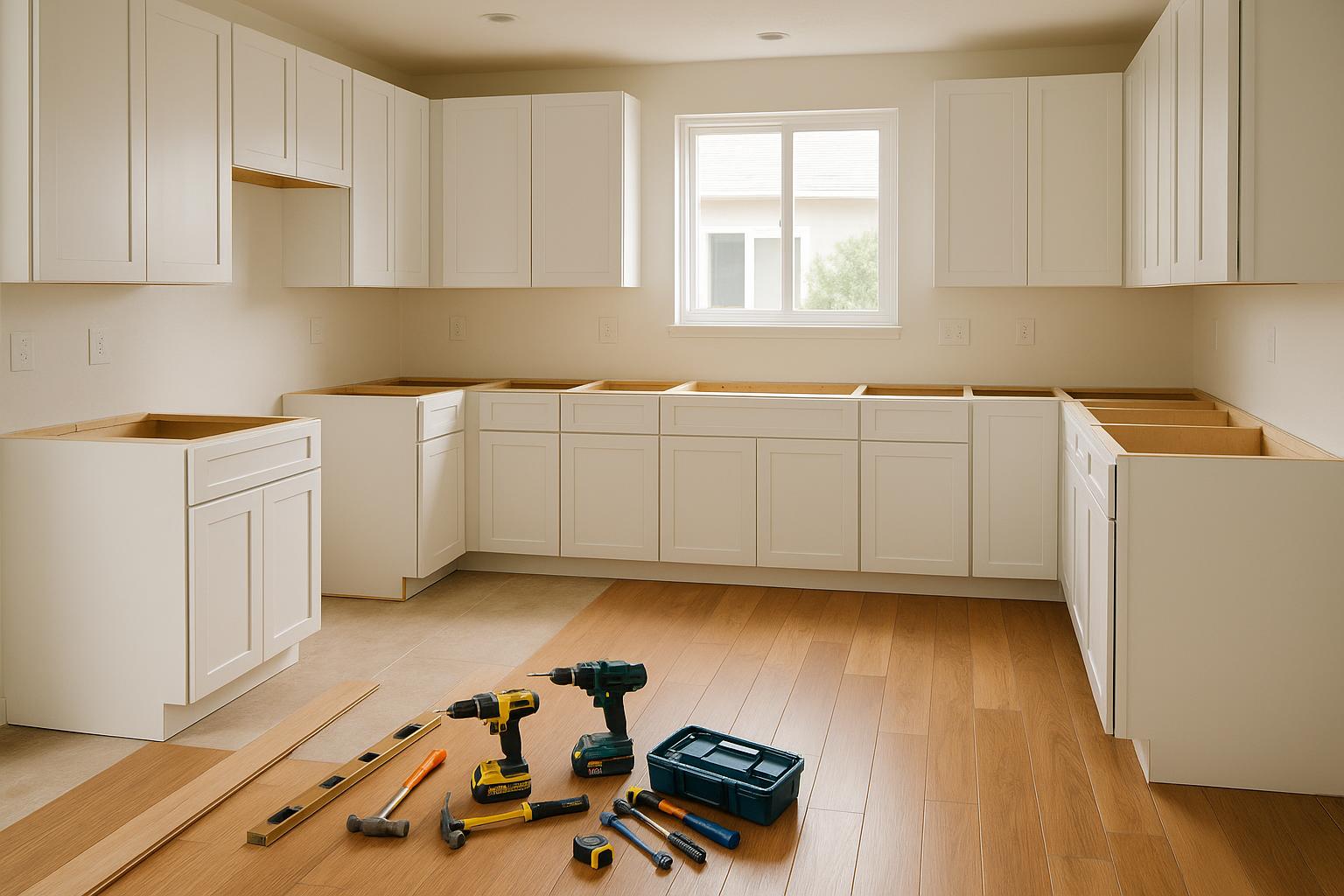
Phase 5: Cabinets and Countertops (1–2 Weeks)
Cabinet installation is one of the most transformative moments in a kitchen remodel. Once cabinets are set, the kitchen suddenly starts to look like a kitchen again. After cabinets are installed and leveled, countertop fabricators come to do a final template measurement. The countertops are then fabricated and installed, which typically takes one to two weeks from templating to installation.
What slows this phase down: Custom cabinetry and natural stone countertops often have longer lead times. If you've selected a popular quartz or granite, availability is usually better, but exotic materials can add weeks to the schedule.
Phase 6: Finish Work and Installation (1–2 Weeks)
This is where everything comes together. Appliances are installed. Plumbing fixtures — your sink, faucet, and garbage disposal — go in. Light fixtures are hung. Flooring is completed if it wasn't done earlier. Hardware is mounted on cabinets. The backsplash gets its finishing touches. Trim and molding are installed and caulked.
Finish work requires precision and patience. Rushing this phase is where quality suffers, so a good remodeling team takes the time to get every detail right.
Phase 7: Final Walkthrough and Punch List (2–3 Days)
Before the project is officially complete, you'll do a walkthrough with your contractor to identify any remaining touch-ups or adjustments. This punch list might include things like a cabinet door that needs a minor alignment, a paint touch-up, or caulking that needs a second pass. Reputable contractors welcome this step because it ensures you're completely satisfied.
So What's the Total Timeline?
Here's a realistic summary for a mid-range to upscale kitchen remodel in San Diego:
- Design and planning: 3–6 weeks
- Permits: 1–4 weeks (often overlaps with material ordering)
- Active construction: 6–10 weeks
- Total from start to finish: 10–16 weeks
Smaller projects, like a cosmetic refresh with new cabinets and countertops but no layout changes, can be completed faster. Larger projects that involve structural changes, room additions, or high-end custom work may take longer.
How to Keep Your Remodel on Schedule
While some delays are outside your control, there's a lot homeowners can do to help keep things moving:
- Make material selections early. Appliances, countertops, and tile can have long lead times. Ordering early prevents construction delays.
- Finalize your design before construction starts. Changes mid-project are the single biggest cause of timeline overruns.
- Be responsive. When your contractor or designer asks a question, a quick answer keeps the schedule on track.
- Work with an experienced local contractor. A remodeling company that knows San Diego's permitting process, local suppliers, and common building conditions will navigate the process more efficiently than someone unfamiliar with the area.
A Realistic Timeline Leads to a Better Experience
Understanding the real timeline of a kitchen remodel helps you plan your life around it — setting up a temporary kitchen, budgeting appropriately, and managing expectations. At Iron Gate Builders, we walk every San Diego homeowner through a detailed project schedule before construction begins, so there are no surprises. When you know what to expect at each phase, the process feels manageable and even enjoyable.
If you're considering a kitchen remodel in San Diego and want a clear, honest timeline for your specific project, we'd love to talk. Reach out to our team to start the conversation.